
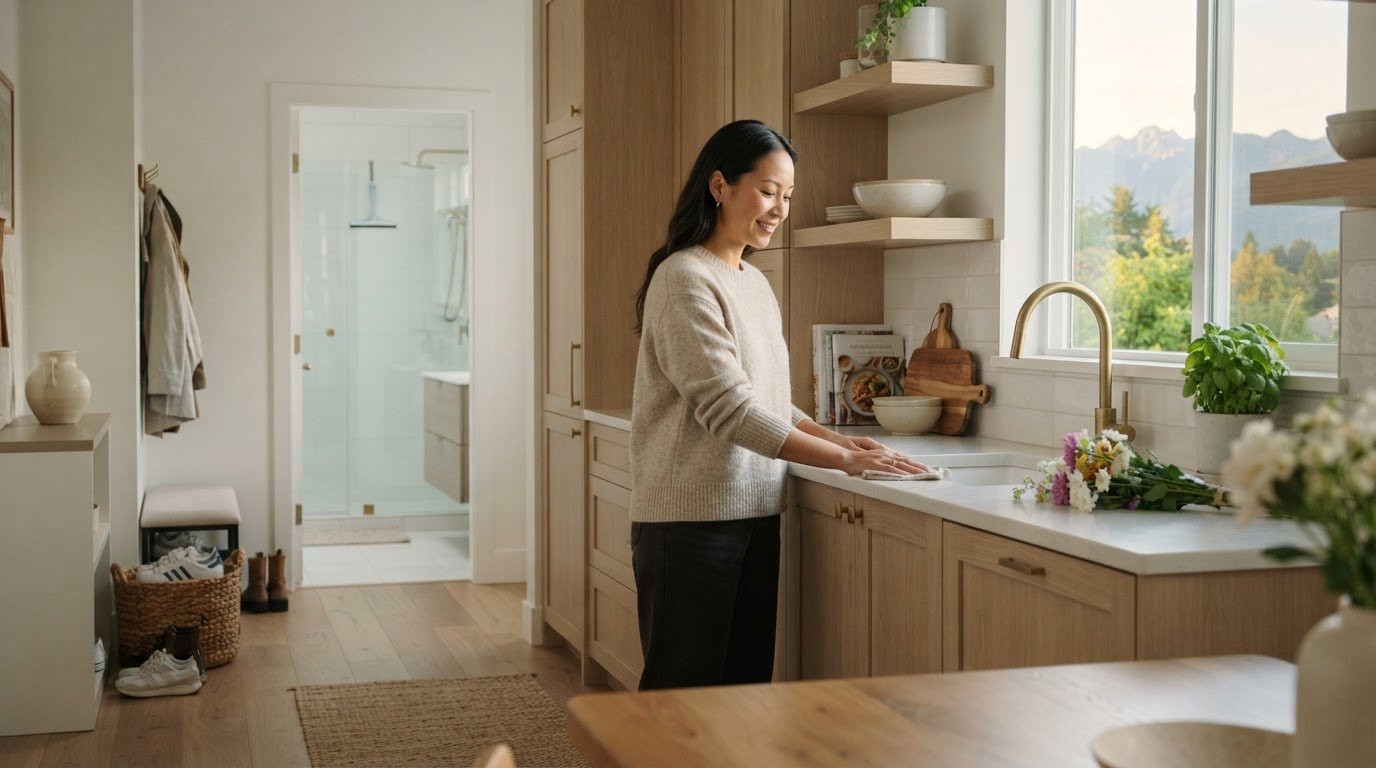
Professional cleaning sets a fresh baseline; small daily habits help keep it that way. The practical answer to how to maintain a clean home after professional service is a short daily reset: put away clutter, wipe frequently used surfaces, and sweep or vacuum busy areas. A 10-minute routine can cover these simple touch-ups, while a quick squeegee after each shower helps limit water spots on glass and tile.
It’s easy to want a spotless home to stay that way without adding more work to your day. Maintenance cleaning is the small, recurring care that helps keep rooms tidy between professional visits. It doesn’t mean repeating a full clean yourself; it means taking care of little messes before they build up.
This guide walks through practical daily habits, a 10-minute evening kitchen reset, and a brief shower-squeegee routine. You’ll see how these steps can help keep counters clearer, floors tidier, and bathrooms fresher between visits, without turning home care into a major project.
Key Takeaways
- Make clutter easier to manage by returning shoes, dishes, and mail to their places during a daily walk-through.
- Use an evening kitchen reset to clear dishes and wipe fresh spills before they linger overnight.
- Keep a squeegee in the shower so it’s easy to clear water from glass and tile after use.
- Consider recurring housekeeping when regular touch-ups no longer feel manageable, and keep small routines going between visits.
1. Daily micro-habits to prevent household clutter and grime
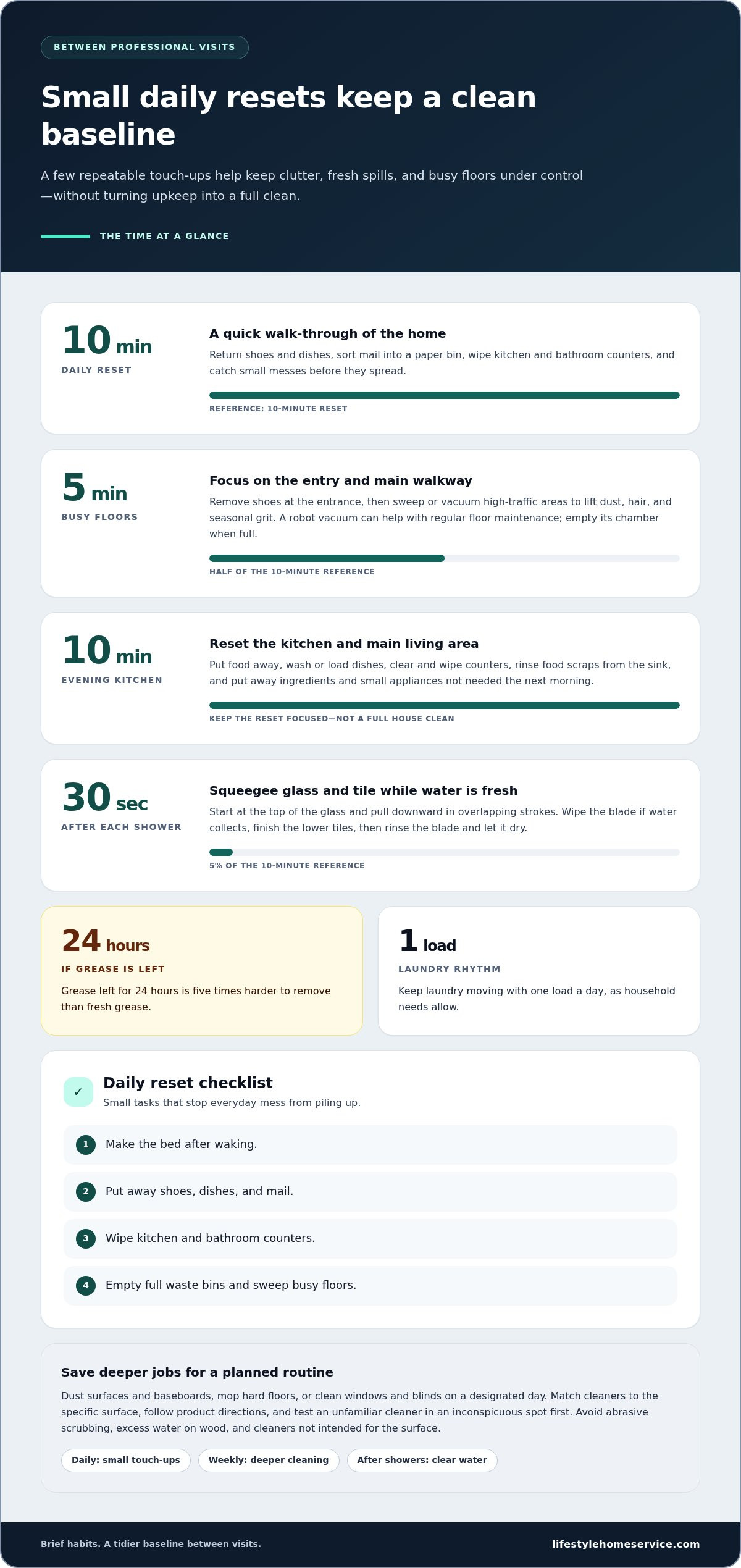
Maintenance cleaning means small, repeatable tasks that preserve a clean baseline between professional visits. A practical answer to how to maintain a clean home after professional service is to set aside a daily 10-minute reset. Walk through each room, return shoes and dishes, sort mail into a paper bin, and wipe kitchen and bathroom counters. These steps keep clutter from spreading without turning house cleaning into a major project.
Focus on high-traffic areas daily after professional service. Remove shoes at the entrance, then sweep or vacuum busy floors to lift dust, hair, and winter grit. A five-minute pass through the entry and main walkway fits easily into a routine. A robot vacuum can help with regular floor maintenance while you’re away; empty its chamber when full. It doesn’t replace detailed cleaning.
For common household surfaces in Canada, choose a cleaner labelled for the specific material and follow its directions. A clean microfiber cloth suits routine dusting and wipe-downs. Test an unfamiliar cleaner on an inconspicuous spot first. Avoid abrasive scrubbing, excess water on wood, or cleaners not intended for a surface, since these can damage finishes.
If you’re deciding how to maintain a clean home after professional service, keep daily tasks brief and plan deeper jobs for a weekly routine. Dust surfaces and baseboards, mop hard floors, or clean windows and blinds on a designated day. This balances everyday upkeep with less frequent cleaning.
Use this checklist for a simple daily reset:
- Make the bed after waking.
- Put away shoes, dishes, and mail.
- Wipe kitchen and bathroom counters.
- Empty full waste bins and sweep busy floors.
A daily walk-through catches small messes before they pile up. Adjust your routine to household traffic, pets, and seasonal dirt tracked indoors.
2. A nightly kitchen and counter reset
Set aside ten minutes each evening to reset the kitchen and main living area. Put food away, then wash cooking utensils and dishes or load them into the dishwasher. Clear and wipe countertops so crumbs and spills don’t accumulate overnight. Clean surfaces make breakfast preparation simpler and give the room a calmer start.
Deal with fresh messes after each meal. Sauce near the stove, crumbs beside the toaster, and a splash around the sink are easier to handle before they dry. Grease left for 24 hours is five times harder to remove than fresh grease. Use a cloth and a cleaner suited to the counter material, and follow the product directions. This friendly cleaning habit focuses effort where cooking leaves marks.
Keep the kitchen sink clear as part of the same reset. Rinse food scraps from dishes into the compost or waste container, wash the utensils you used, and wipe the sink basin and tap. A clear sink gives you room to wash dishes and helps prevent food residue and odours from lingering. If dishes need to soak, keep them together rather than spreading them across the counter.
Finish with a quick look at busy spots: the counter beside the stove, the island, and the path between the sink and table. Put away ingredients and small appliances you won’t need the next morning. Spot-clean visible spills, and leave baseboards and detailed work for a planned deeper-cleaning day. This keeps the nightly reset focused instead of letting it become a full house-cleaning session.
Ten focused minutes can leave the kitchen ready for the next day, including a clear counter and sink. If you want a professionally cleaned starting point for this routine, explore residential cleaning support.
3. Using a shower squeegee
After each shower, spend thirty seconds clearing water from the glass and tile with a squeegee. Start at the top of the glass and pull downward in overlapping strokes. Wipe the blade with a cloth when water collects along its edge, then finish the lower tiles. Removing excess water can reduce water spots and mildew between professional visits.
Make the habit easy to repeat by keeping the squeegee within reach of the shower. Use steady strokes rather than pressing hard, especially on glass. On tiled walls, work from the top down, directing water toward the drain. This quick pass removes surface water before it dries and helps limit the residue that can make a thorough bathroom clean more demanding.
Follow the squeegee with a brief check of the shower floor and fixtures. Pick up visible hair, rinse away fresh soap, and leave the curtain or door open so the area can dry. Don’t use a dirty blade; rinse it after use and let it dry. These small steps help keep the shower ready for its next use without adding a lengthy task.
Keep laundry moving with one load a day, as household needs allow. Put worn clothes in a hamper instead of on the bathroom floor, and fold clean items while relaxing in front of the television. Keeping the hamper area clear makes it easier to wipe the floor during weekly cleaning. The same tidy approach helps prevent towels from piling up around the shower.
Reserve deeper bathroom work for a planned weekly routine, such as dusting surfaces or mopping hard floors. During spring cleaning or window cleaning, choose a product intended for that surface rather than assuming shower cleaner is suitable. A squeegee can clear water from glass, but keep the shower tool clean and separate from household window-cleaning cloths.
4. Benefits of maintaining a clean home between professional visits
Small upkeep helps preserve a clean baseline instead of letting everyday soil gather unnoticed. Wipe fresh spills, clear the kitchen sink, and vacuum busy floors before messes spread into nearby rooms. In a Canadian winter, wet footwear can leave grit around the entryway; removing it promptly helps keep the area under control. The practical payoff is that fewer small messes compete for your attention at once.
Regular touch-ups also leave more time for deeper cleaning to focus on built-up grime and less frequent tasks. Vacuuming crumbs beneath a dining table during routine care, for example, helps stop them spreading across the floor. A weekly plan for mopping hard floors or dusting baseboards covers jobs a daily reset may miss. Spring cleaning can then focus on overlooked areas rather than catching up on every surface.
Before a professional house cleaning, put away personal items, clear accessible surfaces, and leave a short note about priorities, such as a heavily used entryway. Afterward, walk through the rooms, return belongings to their places, and continue with light touch-ups instead of repeating the full clean.
Consistent care can make the time between visits more manageable. Assign household members clear tasks, such as putting away shoes or loading breakfast dishes, to share the work. A robot vacuum can help maintain floors, while a person handles edges, stairs, and clutter it can’t reach. Neither replaces detailed professional work; each has a distinct role.
Choose habits that fit your household, then keep them steady. A quick floor check after muddy boots, a wipe beneath the coffee maker, or a tidy-up before bed can prevent a small task from becoming a larger weekend project. For help restoring that fresh starting point, schedule a professional home cleaning.
Lifestyle Home Service: Residential Cleaning
Lifestyle Home Service provides Residential Cleaning when routine touch-ups aren’t enough to restore a fresh, comfortable baseline. It can also help when household cleaning becomes difficult to keep up with or you’d like ongoing support. Choose Recurring Housekeeping for a regular cleaning rhythm, or Residential Cleaning when your home needs a refresh. Wiping counters and clearing shower glass can help maintain that clean feeling between appointments. Eco-Friendly Cleaning is also available for households that prefer an environmentally friendly approach. A clean home should fit comfortably into everyday life, not add another source of stress. Contact Lifestyle Home Service to discuss your cleaning needs or schedule an appointment.
Make a Cleaning Rhythm That Fits Your Home
A clean home is easier to enjoy when its upkeep fits the way you live. Choose a routine you can maintain through busy weeks, changing seasons, and unexpected messes. How to maintain a clean home after professional service doesn’t need to mean a perfect routine; consistency matters more than an ambitious list of chores. Adjust your habits when household needs change, and let professional support handle the cleaning that feels hard to keep up with.
Lifestyle Home Service offers Residential Cleaning and Recurring Housekeeping for home care, as well as Commercial & Office Cleaning. If you’re ready for help creating a cleaner starting point or a steady housekeeping rhythm, contact Lifestyle Home Service. Take the next step at a pace that feels right, and make more room for the comfort and time you want at home.
Frequently Asked Questions
What is Maintenance Cleaning?
Maintenance cleaning is planned upkeep that helps a home stay at a chosen level of cleanliness between more thorough visits. It can happen daily, weekly, or bi-weekly, depending on how each space is used. A busy family, for example, may need more frequent attention in the kitchen, while a rarely used guest room can follow a lighter routine.
What daily habits help keep a professionally cleaned home clean longer?
Give household members clear, manageable responsibilities instead of leaving every task to one person. Children can put away shoes, load breakfast bowls, or set the dinner table, while adults handle other routine jobs. A simple chore chart can show who does what and when. Sharing responsibility makes upkeep easier to fit around work, school, and family routines.
How can you maintain clean floors between professional visits?
Match floor care to the mess and surface: vacuum carpeted areas, and sweep hard floors when crumbs or grit appear. Use a vacuum attachment around furniture legs and along edges where dust collects. For a small spill, clean the spot promptly using a method suitable for that flooring. This focused approach catches everyday soil without treating every floor the same way.
How often should kitchens and bathrooms be cleaned between professional services?
Clean kitchen messes after meals, and attend to bathroom touch points as they’re used. For broader upkeep, maintenance cleaning can be daily, weekly, or bi-weekly, depending on household traffic and room use. A bathroom used by several people may need more frequent attention than an occasionally used powder room. Adjust the routine when guests, cooking, or family schedules change.
How can you prevent dust, clutter, and dirt from building up at home?
Create a landing place for incoming items, such as a tray for keys and a bin for household papers. Sort the papers weekly, keeping what needs action and recycling what doesn’t. Try a one-in, one-out rule when bringing home a new item, and use a donation bin for things you no longer need. These habits give belongings a destination before they spread around rooms.