

Yes, recurring cleaning can be scheduled weekly, bi-weekly, or monthly. Bi-weekly means a visit every two weeks. To decide how to schedule recurring cleaning, choose a frequency that suits your home’s upkeep needs, work hours, and budget.
A regular visit can ease the pressure of a busy week, but the right schedule is one that fits your routine. Compare weekly, bi-weekly, and monthly visits, then adjust the plan if your household’s needs change.
We’ll also cover what to prepare before the first visit and how to set clear expectations about priorities and recurring tasks. With a practical rhythm in place, it’s easier to keep your home feeling comfortable without letting cleaning take over your free time.
Key Takeaways
- Choose weekly, bi-weekly, or monthly visits based on how quickly your home needs attention and the upkeep you already manage.
- Use a predictable time in your work routine for cleaning, or group household tasks on days off when your schedule shifts.
- Review the visit frequency and cleaning priorities after the first few appointments to keep the routine practical.
- Before the first visit, identify the areas that matter most and clear personal items from surfaces where possible.
1. Is it possible to organize a recurring, scheduled cleaning service?
Yes. Residential cleaning can be scheduled weekly, bi-weekly, or monthly to suit your household’s needs. Bi-weekly means a visit every two weeks. Choose a day that works with your calendar, then identify the areas to prioritize at each visit.
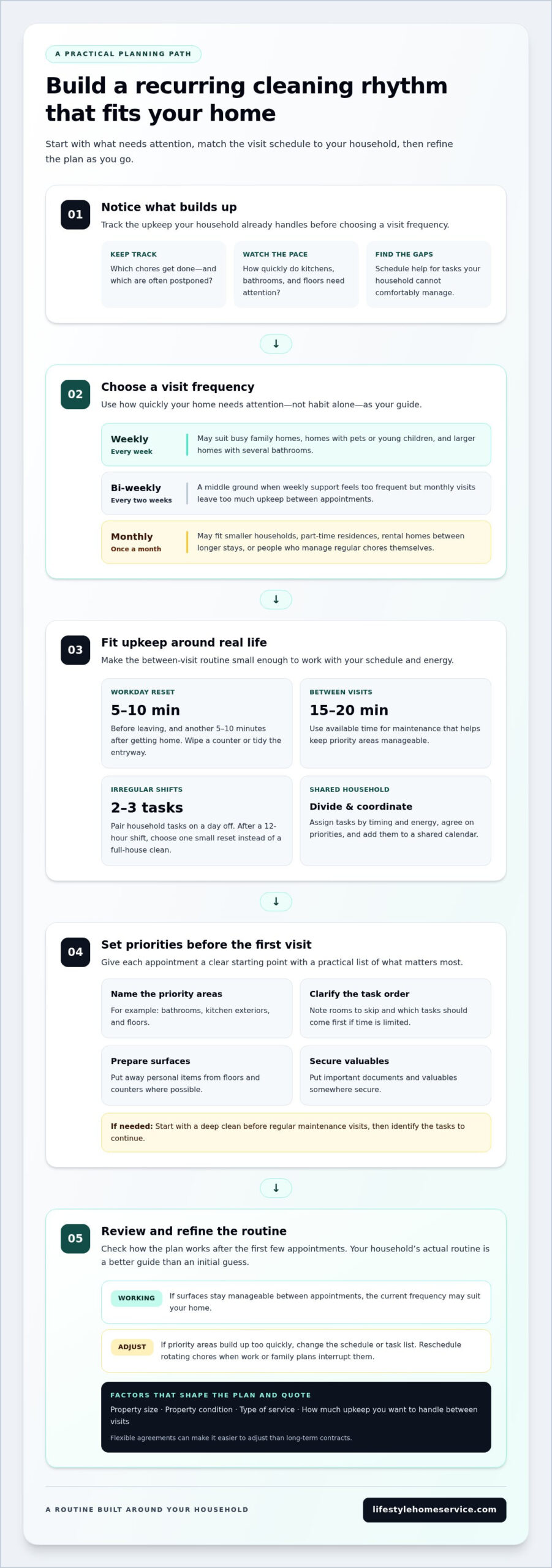
Weekly cleaning may suit busy family homes, homes with pets or young children, and larger homes with several bathrooms. Monthly visits may fit smaller households, part-time residences, rental homes between longer stays, or people who manage regular chores themselves. Bi-weekly visits offer a middle ground when weekly support feels too frequent but monthly visits leave too much upkeep between appointments.
Between professional visits, daily upkeep might include wiping kitchen counters or tidying shared spaces. Weekly visits can cover recurring tasks throughout the home, while monthly visits can focus on areas that need less frequent attention. Choose a schedule based on what builds up fastest in your household, not simply out of habit.
A weekday routine can break chores into manageable steps. For example, assign one focus to each day:
- Monday: clean bathrooms.
- Tuesday: dust surfaces.
- Wednesday: vacuum floors.
- Thursday: wash floors.
- Friday: finish catch-all tasks.
- Saturday: change sheets and towels.
- Sunday: handle daily tasks and reset shared spaces.
When choosing a recurring house cleaning service in Canada, look for a clear task list, a consistent appointment schedule, and straightforward communication about changes. Make sure the proposed routine reflects your home’s priorities and clarifies what each visit covers.
To make a schedule without a cleaning service, assign small daily tasks and give each weekday a focus, such as vacuuming on Wednesday. Add monthly chores, like cleaning less-used areas, to your calendar so they don’t get overlooked.
2. Fitting cleaning around work hours
Start with the time you can protect, not an idealized calendar. If you work outside the home, try cleaning for 5-10 minutes before leaving and another 5-10 minutes after getting home. A quick counter wipe or entryway tidy can stop small messes from piling up. Keep the tasks short enough to fit even on a workday that runs late.
Irregular shifts need a flexible pattern. If you work three days on and three days off, pair two or three household tasks on an off day. After a 12-hour shift, choose one small reset instead of expecting a full-house clean. This approach makes it easier to maintain the routine consistently without using every day off for chores.
Two people sharing household tasks can divide them by timing and energy. One might tidy the kitchen before work while the other handles laundry or floors on a day off. Agree on the priorities and add them to a shared calendar. Clear assignments prevent both people from assuming the other has done a task.
- Before work: wipe kitchen surfaces or clear the sink.
- After work: put away items and reset one shared area.
- On a day off: combine two or three tasks that need more time.
For a commercial space, cleaning can be scheduled after hours or during quieter periods to reduce disruption to staff and customers. Match the appointment window to the building’s busiest times, such as opening hours or scheduled client visits, and note access details in the calendar.
For recurring appointments, choose a time that fits your work pattern and keep the same window where possible. If your shifts change, update the calendar promptly and move the household tasks around too. A plan that adapts is more useful than one that looks perfect but quickly falls behind. You can also explore cleaning appointments around your work hours as part of planning a routine.
3. Matching cleaning frequency to your routine and budget
To decide how to schedule recurring cleaning, track the upkeep your household already handles. Note which chores get done, which are often postponed, and how quickly kitchens, bathrooms, and floors need attention. Schedule visits to fill the gaps rather than paying for work you can comfortably manage yourself. A quote is based on the property’s size, condition, and type of service.
Review the routine after the first few visits. If surfaces stay manageable between appointments, the current frequency may suit your home. If priority areas build up too quickly, adjust the schedule or task list. Your household’s actual routine is a better guide than an initial guess.
Include the time you can spend on upkeep. If you can set aside 15-20 minutes, use that time for maintenance between visits. A quick daily reset with young children might take 5-10 minutes. If illness or limited mobility makes chores harder, divide the work into smaller sections. For three bathrooms, for example, focus on one each week.
A rotation over several weeks can cover less-used areas without tackling everything at once. Add each area to your calendar, and reschedule a task if work or family plans interrupt it. This keeps the plan flexible while helping essential chores stay on track.
If you’re weighing how to schedule recurring cleaning, consider how often your home needs attention and how much you want to handle between visits. Frequency and home size can shape a cleaning company’s pricing tiers. Flexible agreements can make it easier to adjust than long-term contracts. Set your priorities, try the routine, then review its workload and fit after the first appointments.
4. Setting expectations before the first recurring visit
Before the first appointment, list the rooms and tasks that matter most. For example, prioritize bathrooms, kitchen exteriors, and floors if those areas need frequent attention. Note any rooms to skip and which tasks should come first if time is limited. A clear list gives each visit a practical starting point.
If your home needs a thorough clean before regular maintenance begins, consider starting with a deep cleaning. Then identify the tasks you want continued on later visits. Put away personal items from floors and counters where possible, and secure important documents and valuables before the team arrives.
For cancellations, rescheduling, and payment, read the booking terms before accepting an appointment. Those terms should explain how to change or skip a visit and when payment is due. Some recurring arrangements preauthorize a payment method and bill after the job is complete. Keep the agreed process with your appointment details so it’s easy to follow.
Make communication part of the routine. Appointment confirmations and reminders can help you prepare, while arrival notifications can make the visit easier to plan around. If your household needs to change a booking, use the stated rescheduling process promptly so the schedule can be adjusted. Keep a note of any changed priorities for the next appointment.
- List priority rooms and recurring tasks.
- Set aside documents and valuables before the first visit.
- Record the cancellation, rescheduling, and payment terms with your bookings.
- Share changes to priorities before the next appointment.
Use this checklist to prepare for the first visit and establish a clear routine. Arrange recurring cleaning bookings around your home’s priorities and preferred schedule.
Lifestyle Home Service: Residential Cleaning
Lifestyle Home Service offers Residential Cleaning and Recurring Housekeeping for households looking for regular help with home upkeep. Choose a weekly, bi-weekly, or monthly schedule and share the priorities you want addressed at each visit.
Consider Residential Cleaning when household tasks are taking time away from work, family, or rest. Share the rooms and tasks that matter most, then request a quote or schedule an appointment with Lifestyle Home Service. The company also offers Commercial Cleaning and Green Cleaning.
Contact Lifestyle Home Service or visit lifestylehomeservice.com to discuss your cleaning needs.
Make Your Cleaning Plan Work for You
A recurring schedule should support your life, not become another obligation. Treat it as a practical plan that can change as your work patterns, household routines, and priorities shift. Decide what you want more time for, then let that guide how to schedule recurring cleaning, whether you’re aiming for more relaxed evenings, a calmer start to the week, or less time catching up on chores.
Make the decision easy to act on: identify the kind of support that would make the biggest difference, and take one small step towards arranging it. If you’re ready to discuss your home’s cleaning needs, contact Lifestyle Home Service to begin the conversation.
Your routine doesn’t need to be perfect from day one. Start with a manageable plan and adjust it as you learn what works best.
Frequently Asked Questions
Is it possible to organize a recurring, scheduled cleaning service?
Yes. Recurring appointments can be arranged weekly, every two weeks, or monthly. You might book regular visits during a busy work season, then reassess the schedule when your routine changes. In Chilliwack, contact Lifestyle Home Service to discuss recurring cleaning and share your household’s priorities.
Can I choose the time to have my house cleaned?
Share your preferred day and time when arranging an appointment. Lifestyle Home Service offers flexible scheduling, so mention practical details such as work hours, building access, or when the home is occupied. If your routine changes, communicate the update as early as possible so the appointment plan can be adjusted.
How often should you schedule recurring house cleaning?
Choose a schedule based on how quickly your home needs attention and how much upkeep you handle yourself. For example, a household with a tidy kitchen but busy bathrooms might prioritize bathroom tasks between visits. If you’re unsure, start with a manageable schedule, note what accumulates, and use those observations to guide adjustments.
How to set up a recurring cleaning schedule with a cleaning service?
Start by listing your preferred appointment day, priority rooms, and any areas needing special attention. Then request a quote and schedule visits with Lifestyle Home Service. For a Chilliwack home, sharing access instructions and household priorities helps establish a clear plan. Keep your task list handy and update it as your needs change.
What tasks are included in weekly, biweekly, and monthly cleaning?
The task list depends on the home and the agreed scope. Weekly visits may focus on frequently used areas, while less frequent appointments can rotate attention to rooms or surfaces that need less upkeep. Before booking, identify must-do tasks, such as cleaning a guest bathroom or wiping kitchen exteriors, and clarify which priorities should guide each visit.
Is weekly or biweekly cleaning better for different households?
Weekly visits may suit homes with steady upkeep needs, such as families with young children or pets. Bi-weekly visits can work for households that manage lighter tasks between appointments and want professional cleaning every two weeks. Consider household activity, room usage, and the time you have for upkeep when choosing between them.