

The lowest quote isn’t necessarily the clearest sign that a cleaning company is the right fit. Knowing how to vet a cleaning company means checking its legitimacy, insurance, reviews, service scope, written pricing, and procedures for handling complaints or damage. You can make a more confident decision when the details are clear before work begins.
It’s sensible to want reassurance about who will enter your home or workplace, what the cleaning covers, and what happens if something goes wrong. A careful comparison looks beyond the headline price: the quote should reflect the space, your cleaning needs, and the tasks included.
This guide covers practical checks for Canadian customers, from reviewing a company’s track record and staff procedures to comparing written quotes on equal terms. You’ll also find questions that clarify what’s included, how concerns are handled, and whether the proposed service fits your needs. The goal is to choose with confidence and know what to expect before booking.
Key Takeaways
- Look beyond a company’s online presence: confirm its business details and ask how insurance and bonding address potential risks.
- Use reviews and references to spot patterns in reliability, communication, and the quality of completed work.
- Compare written quotes by matching the task list, exclusions, and cleaning schedule to your space and needs.
- Ask how to report a concern or damage, who handles it, and what steps follow after you raise an issue.
- Weigh the proposed service and its fit for your property, not just the lowest quoted price.
1. Confirming insurance and business legitimacy
To check a cleaning company’s insurance and liability coverage in Canada, request current proof of commercial liability insurance and workers’ compensation coverage. Check that the documents name the same business you’re hiring, and clarify any unclear details with the insurer or workers’ compensation board.
Start with the company’s legal or registered business name. Compare it across the quote, agreement, invoice, and insurance documents. If the names differ, ask how they relate before booking. A trading name may differ from a legal name, but the paperwork should make the connection clear.
Next, request evidence of commercial liability insurance. Read the certificate rather than relying on a verbal assurance or website statement. Check the insured business name, policy dates, and type of work described. If the document doesn’t clearly relate to cleaning, ask the insurer to clarify the coverage.
For commercial cleaning, liability coverage can help protect a business against claims related to accidents or property damage. Insurance and bonding may address different risks, including theft. Ask what each policy or bond covers, whose losses it may address, and what exclusions apply. A bond is not a replacement for liability insurance.
Check workers’ compensation coverage separately, especially when cleaners will work at your home or business. Request documentation showing the company’s name and current coverage details. If employees will enter a commercial property, clarify who is responsible for workplace injury coverage and how that responsibility is documented.
A document check also helps reveal practical gaps. For example, a certificate might show an expired policy, an unrelated business name, or coverage that doesn’t describe cleaning operations. Pause the booking until the company provides a clear explanation and current documents. Keep copies with the signed service agreement for your records.
Business legitimacy involves more than insurance. Look for consistent contact details, a physical business address, and written terms that identify who is responsible for the work. Compare these details with the company’s public business information. A mismatch isn’t proof of wrongdoing, but it gives you a specific issue to resolve before granting access.
For a commercial property, include insurance and bonding in your purchasing review. Record the documents received, their dates, and any clarifications in the vendor file. For home cleaning, keep the same basic record with your booking confirmation. This makes it easier to identify the company you hired and understand the protections described in writing.
Licensing can matter, but requirements may depend on the municipality and business activity. Check the local rules for your location instead of assuming one city’s requirements apply across Canada. A clear business name, relevant insurance documents, workers’ compensation information, and written terms together provide a stronger legitimacy check.
3. Requesting a written quote and service scope
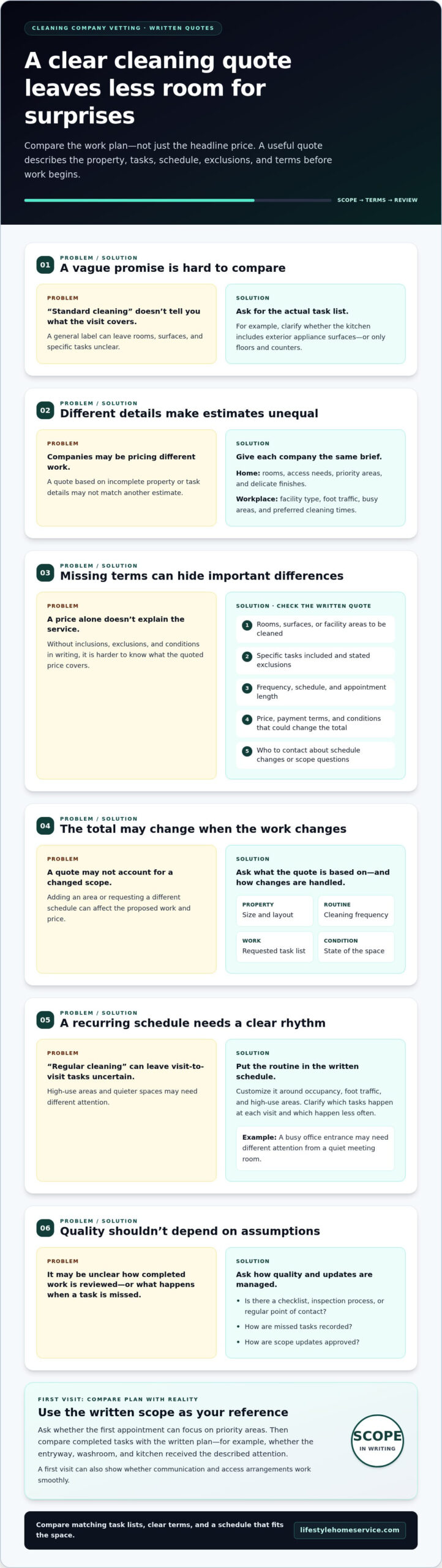
A written quote turns a general promise into a clear plan. Ask for the proposed tasks, areas, schedule, exclusions, and price before committing. The quote should describe the property and requested work, not simply say “standard cleaning.” For example, specify whether the kitchen includes exterior appliance surfaces or whether the plan covers only floors and counters.
If you’re deciding how to vet a cleaning company, compare estimates using the same details. Describe the rooms, access needs, priority areas, and concerns, such as delicate finishes. For a workplace, include the facility type, foot traffic, busy areas, and preferred cleaning times. These details help shape a relevant scope and make estimates easier to compare.
Read each quote for what it leaves out as well as what it includes. A clear document should identify:
- The rooms, surfaces, or facility areas to be cleaned
- The specific tasks included and any stated exclusions
- The proposed frequency, schedule, and appointment length
- The price, payment terms, and conditions that could change the total
- Who to contact about schedule changes or scope questions
The price depends on the property and requested work, and is provided after a quote request. Factors include the size and layout, cleaning frequency, task list, and condition of the space. Ask how a change in scope affects the quote. This helps prevent misunderstandings if you add an area or request a different schedule.
An initial appointment can help you assess whether the agreed scope suits the property. Ask whether the first visit can focus on priority areas, then compare completed tasks with the written plan. For example, note whether the entryway, washroom, and kitchen received the attention described. A trial visit can also show whether communication and access arrangements work smoothly.
For recurring service, ask how the schedule can be customized around occupancy, foot traffic, and high-use areas. A busy office entrance may need different attention from a quiet meeting room. A written schedule should clarify which tasks happen at each visit and which happen less often. That gives both sides a reference when routines change.
Knowing how to vet a cleaning company also means understanding how it reviews quality. Ask whether the company uses a checklist, inspection process, or regular point of contact. Clarify how missed tasks are recorded and how scope updates are approved. These questions show whether quality control is part of the service plan, rather than an assumption.
For a home, compare your written priorities with the planned residential cleaning service scope before booking. A clear plan gives you a sound basis for reviewing the work and requesting adjustments.
4. Understanding complaint and damage procedures
Before signing, read the agreement to find a clear way to report concerns. It should name the contact method, explain how complaints are reviewed, and describe how damage claims are handled. For example, confirm whether to report a scratched countertop by email, phone, or through a booking portal.
A cleaning service contract should identify the agreed tasks, schedule, payment terms, cancellation notice rules, and any satisfaction guarantee. It should also explain how to report missed work or damage, what information to provide, and what happens next.
Ask what happens after you submit a complaint. A useful procedure explains who receives it, how the issue is documented, and how the company communicates next steps. For example, a missed bathroom task should be recorded against the agreed checklist, not treated as a vague concern.
Read satisfaction guarantee terms closely. The research describes a 24-hour window for reporting problems under a cleaning company’s satisfaction guarantee. Treat that as a possible stated condition, not a universal Canadian rule. Check the agreement for the reporting deadline, eligible issues, and remedy offered. Keep the booking confirmation and a copy of the terms.
Safety risks can include wet floors, cleaning products, misplaced keys, or accidental damage to fragile items. Before the appointment, identify delicate surfaces, secure valuables, and clarify how staff will access the property. In an office, put away confidential papers and restrict access to rooms containing sensitive records.
Privacy deserves direct attention. Ask how keys, alarm codes, and entry instructions are stored and who can access them. Provide only the access details needed for the appointment, and agree how keys will be returned or codes managed after service ends.
If something breaks, document the item and damage promptly. Take clear photos, note when you noticed the issue, and keep relevant messages and receipts. Report the concern through the channel named in the contract. A written record connects the incident to the appointment and keeps follow-up details together.
For a service concern, describe the specific room, task, or item involved. Avoid broad claims such as “the whole visit was poor.” A clear report, such as “the entryway floor was not cleaned,” gives the company a concrete issue to review and helps you track its response.
Finally, check that cancellation terms explain notice requirements and any resulting charges. Make sure the agreement also sets expectations for schedule changes, complaint handling, and damage reports. Clear procedures give both sides a practical reference before a concern arises.
5. Comparing cleaning scope and quotes
A low quote can reflect fewer tasks, not better value. Compare the work proposed for your home, then weigh the price against that scope. A quote for wiping kitchen counters isn’t equivalent to one that also covers appliance fronts, cabinet exteriors, and floors.
Before hiring a residential cleaning company, ask what each room’s service includes, which tasks are excluded, and how the price is calculated. Also ask how to change the schedule, what happens if the home’s condition differs from its description, and how special requests affect the scope.
Use the same description of your home for every estimate. Note the rooms to clean, flooring types, priority areas, pets, access arrangements, and delicate surfaces. For example, if one quote includes the main bathroom and another includes every bathroom, record the difference before comparing totals.
Ask for a detailed pricing breakdown and confirm what the written agreement includes. The price depends on the home and requested work, and is provided after a quote request. Factors include the property’s size and layout, condition, cleaning frequency, and selected tasks.
For a commercial facility, the proposed estimate and service should reflect its specific needs. Foot traffic and congested areas can affect the cleaning plan. A busy entrance, shared washroom, and quiet office may need different attention. Ask how the schedule accounts for those areas and the facility’s daily use.
Compare the value offered, not just the lowest total. A quote may seem less expensive because it omits priority rooms, uses a less frequent schedule, or excludes tasks you expected. Put each estimate beside the same task list. Mark items as included, excluded, or unclear, then resolve gaps before choosing.
Also compare how each company responds to practical questions. Does the representative take notes during a property review? Do they ask about priority surfaces, access, or areas with heavier use? These details help show whether the proposed work reflects your home rather than a generic checklist.
A useful comparison table can keep the decision grounded:
- Rooms and surfaces covered
- Tasks included and excluded
- Cleaning schedule and requested adjustments
- Quote total and any stated conditions
- How changes to the home or task list affect the service
Finally, match the estimate to your priorities. If a clean kitchen matters most, confirm those exact tasks appear in writing. If you’re comparing recurring visits, assess whether the schedule gives enough attention to the areas that need it most. The clearest quote is one you can compare line by line.
5. What should you check when vetting a cleaning company in Canada?
Look for experience relevant to your property. A team familiar with offices may understand shared workspaces, while hotel experience can suit guest turnover. Ask for references from businesses similar to yours. Compare them with online reviews and testimonials, looking for recurring comments about reliability, communication, and completed work.
Read reviews for detail, not just star ratings. A specific review explaining how staff handled a missed task tells you more than a brief compliment. Look for repeated patterns across different dates and platforms. Note how the company responds to criticism, especially whether its replies address concerns clearly and professionally.
For commercial work, ask how staff are prepared before granting access. Find out how cleaners learn sanitation methods, safety procedures, and product handling. Ask whether supervisors or team members receive ongoing training. If a company mentions certifications or background checks, clarify what they cover and how they relate to your facility’s needs.
Products and equipment affect the cleaning approach. Ask what the team uses and whether it can accommodate a preference for eco-friendly solutions. For a workplace with specific cleaning needs, ask about hospital-grade disinfectants or HEPA filter vacuums. Confirm that the proposed products and equipment suit the surfaces and tasks in your written scope.
Quality controls matter after the initial visit, too. Ask how the company checks completed work, records recurring issues, and communicates with you. Regular inspections, tracking tools, and a dedicated contact person can help make service more consistent. For example, a shared checklist can show whether priority areas receive attention during scheduled visits.
Use a site visit to assess how carefully the company considers the space. During an in-person walkthrough, notice whether its representative takes notes about access, busy areas, and sensitive rooms. A thoughtful estimate should reflect those details. For a facility with crowded entrances, discuss how foot traffic affects the cleaning plan.
Responsiveness is another practical signal. Call or message with a clear question about the work, then notice whether the answer is direct and timely. Ask how special requests are handled and which communication channel to use. Clear answers make it easier to coordinate access, schedule changes, and service details.
Before deciding, consider the evidence together: relevant references, review patterns, staff preparation, equipment, quality checks, and communication. No single review or credential tells the whole story. The company’s answers should relate to your property and tasks, rather than rely on general claims.
Ready to discuss cleaning needs for your property? Request a cleaning quote with the areas and priorities you want addressed.
Lifestyle Home Service: Residential Cleaning
Lifestyle Home Service provides residential cleaning in Chilliwack for a fresher, more comfortable home. Turn to the local team when regular upkeep is hard to fit into your routine, or when recurring housekeeping would help keep your space in order. For workplaces, its commercial and office cleaning serves professional spaces. Eco-friendly cleaning is also available for those who prefer it.
Share the areas you want cleaned and the priorities that matter most, such as kitchens, bathrooms, or floors. A clear request helps tailor the service to your home and makes it easier to discuss next steps. Contact Lifestyle Home Service for a cleaning quote or appointment.
Make your next cleaning decision with confidence
A cleaner home or workplace can give you more room for the parts of life that matter. Choose a service that fits your routine and the kind of space you want cared for. Knowing how to vet a cleaning company helps you make that choice with clear expectations, not guesswork.
Lifestyle Home Service offers Residential Cleaning and Recurring Housekeeping for homes, along with Commercial & Office Cleaning for workspaces in Chilliwack. Whether you want help keeping up with regular cleaning or support for a professional setting, start by describing your priorities and the areas that need attention.
Take the next step at a pace that feels right for you. Contact Lifestyle Home Service today to discuss your cleaning needs and request a quote. A comfortable, refreshed space can start with one simple conversation.
Frequently Asked Questions
Can I trust your employees?
Lifestyle Home Service’s staff are fully vetted, insured, bonded, and background-checked. These safeguards address common concerns about inviting cleaners into your home, while clear arrangements help protect your privacy. Before a visit, put away sensitive items and identify any rooms that are off-limits. If you provide a key or door code, agree on how access will be managed and the property secured afterward.
In the event of any breakage during the cleaning process, how is it addressed?
Report the breakage promptly, describe what happened, and keep a photo or written record. Lifestyle Home Service asks clients to report dissatisfaction within 24 hours and says it will revisit at no additional cost. That revisit addresses dissatisfaction; it isn’t a promise of reimbursement for broken belongings. Keep messages about the incident and any agreed follow-up together, so the concern and response remain easy to track.
Is a cleaning company that has been operating since 2013 more trustworthy?
Operating since 2013 may show business history, but a start date alone doesn’t prove service quality or reliability. Look for supporting evidence, including consistent customer feedback and clear communication. Lifestyle Home Service was established in 2009, which provides background about the business. Consider that information alongside the company’s written service details and how it responds to questions, rather than treating longevity as a guarantee.
What are red flags when hiring a cleaning company in Chilliwack?
In Chilliwack, be cautious of cash-only demands, reluctance to provide written terms, vague insurance answers, or estimates that don’t explain the work. Check that the business name and contact details are consistent across paperwork and public listings. Reviews can offer clues, too. Look for repeated reports of missed visits, unfinished tasks, or unhelpful complaint responses, rather than relying on a single review or rating.
Who will clean my home?
Lifestyle Home Service’s cleaning staff carry out its home cleaning appointments. The company’s staff are fully vetted, insured, bonded, and background-checked. Help the visit go smoothly by noting priority rooms, fragile belongings, and spaces you want left untouched. For office appointments, cleaners are trained in data privacy and avoid handling delicate documents, helping protect papers in the workplace.
How can you confirm a cleaning company has workers’ compensation coverage in your province?
In British Columbia, ask the company for current workers’ compensation coverage documentation and check that its business name matches your agreement. Use the provincial workers’ compensation board’s process to verify the coverage details. If the company uses subcontractors, ask whose coverage applies to those workers and request the relevant documentation. Keep the information with your service records for future reference.
How do you check a cleaning company’s business licence and reputation in Canada?
For a cleaning company serving Chilliwack, check the City of Chilliwack’s business licensing information and compare the listed business name with its quote and agreement. To assess its reputation, read reviews across different platforms and note repeated, specific feedback. Several comments describing clear communication or recurring missed tasks can reveal more than general praise. References from customers with similar properties can add useful context.
How should you compare quotes from cleaning companies fairly?
Give each company the same description of your property and priorities, then compare written tasks rather than totals alone. Check whether each quote covers the same rooms, surfaces, visit frequency, and requested extras. Note exclusions and conditions that could change the scope. A side-by-side comparison can explain why estimates differ and help you assess the service you’ll receive, not just the headline amount.