

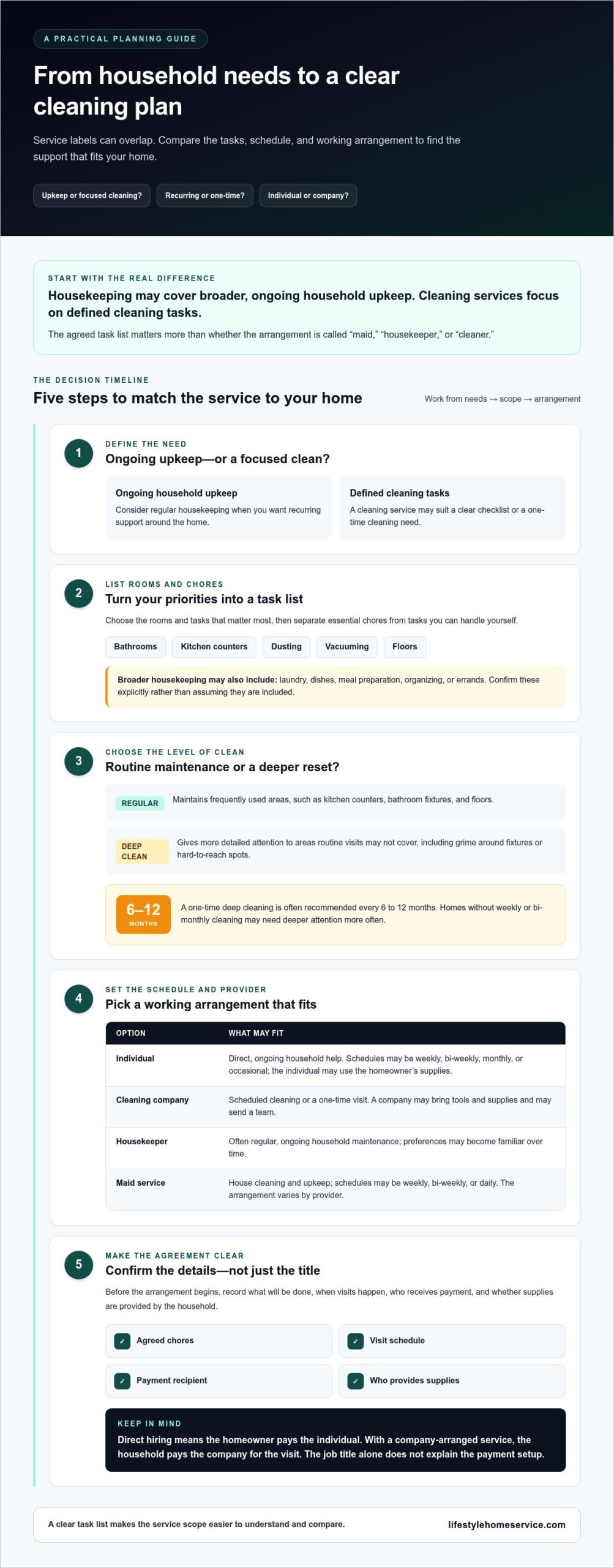
If you’re asking, “Maid service vs cleaning service, what’s the difference?” the practical answer is usually the scope of work. Cleaning services focus on cleaning tasks, while housekeeping may include broader, ongoing household upkeep. The labels can overlap, so the agreed task list matters most.
It’s understandable to expect “maid,” “housekeeper,” and “cleaner” to mean three clearly defined jobs. In everyday use, these terms can describe similar services. To answer “maid service vs cleaning service, what’s the difference?”, compare the actual tasks, schedule, and household needs.
This guide explains how the terms are commonly used in Canada, what duties may be included, and how scope and scheduling affect a cleaning request. You’ll also find a side-by-side comparison and a practical way to choose the support that fits your home.
Key Takeaways
- Compare the task list, not just the service label, since “maid,” “housekeeper,” and “cleaner” can mean different things from one arrangement to another.
- Choose regular housekeeping for ongoing household upkeep, or a cleaning service when your priority is defined cleaning tasks.
- Before booking, decide which rooms and tasks matter most so the service fits your home and routine.
- Understand what affects the cost: the home’s size, cleaning frequency, and the work included all shape the quote.
- Use the decision guide to match your needs with the right kind of help and enjoy a cleaner, more comfortable home.
What’s the Difference in Maid Service versus Housekeeping?
The difference between housekeeping and maid services usually comes down to the range of household tasks, not a fixed job title. Choose based on whether you need regular upkeep, focused house cleaning, or a deeper clean. Compare the task list and schedule before deciding.
Individual Maid or Cleaning Company
An individual maid may provide ongoing help on a weekly, bi-weekly, monthly, or occasional schedule. A cleaning company may offer recurring visits or one-time appointments for needs such as a move-related cleanout. Companies may bring their own tools and supplies and send a team, while an individual housekeeper may use the homeowner’s supplies. The right fit depends on the tasks and working arrangement you prefer.
| Option | Typical focus | Schedule | Tools and working arrangement |
|---|---|---|---|
| Individual maid | Household upkeep | Weekly, bi-weekly, monthly, or occasional | May use homeowner’s supplies |
| Cleaning company | Defined cleaning tasks | Recurring or one-time | May bring tools and supplies; may send a team |
| Housekeeper | Regular household maintenance | Often a regular, ongoing schedule | May learn household preferences over time |
| Maid service | House cleaning and upkeep | Weekly, bi-weekly, or daily | Service arrangement varies by provider |
Choose an individual for a direct, ongoing household arrangement, or a cleaning company for scheduled cleaning or a one-time visit.
Housekeeper and Maid Roles
A housekeeper commonly supports broader household upkeep, which may include laundry, dishes, meal preparation, organizing, or errands. A maid’s duties are more often associated with cleaning and related housekeeping. In practice, the titles can blur: one household may use “maid” for regular upkeep, while another reserves “housekeeper” for a wider range of tasks.
Regular housekeeping can include cleaning bathrooms and kitchens, dusting, and vacuuming. A recurring schedule also helps a housekeeper learn which rooms need attention and how the household prefers tasks to be handled. By contrast, a maid service may focus on an agreed cleaning checklist rather than ongoing household routines.
Regular Upkeep and Deep Cleaning
Regular cleaning maintains frequently used areas, such as kitchen counters, bathroom fixtures, and floors. Deep cleaning gives more detailed attention to areas that routine visits may not cover. For example, a household might schedule regular vacuuming and bathroom cleaning, then arrange a deeper clean for grime around fixtures or hard-to-reach spots.
A one-time deep cleaning is often recommended every 6 to 12 months. Homes without weekly or bi-monthly cleaning may need deeper attention more often. If six months or longer have passed since the last thorough cleaning, starting with a deep clean can reset the household’s routine. Choose the service by listing priority rooms and tasks first.
Definitions of maid, housekeeper, and domestic worker
These titles describe overlapping work, not a guaranteed task list. In Canada, match the term used in an arrangement to the actual chores, schedule, and payment setup.
What the Titles Usually Mean
A housekeeper or house cleaner is someone employed to clean a home or apartment. A maid traditionally refers to a female domestic servant whose duties include cleaning and other housekeeping. “Domestic worker” is broader: it describes paid work in another person’s home, which may include childcare, laundry, cooking, and cleaning.
Those distinctions can help, but everyday usage varies. One homeowner might call a weekly cleaner a maid, while another uses “housekeeper” for someone who also handles laundry. Write down each task, such as vacuuming, dishwashing, or meal preparation, rather than relying on the title alone.
Household Chores and Lifestyle
Housekeeping can cover more than cleaning surfaces. A household routine may include laundry, dishes, meal preparation, organizing spaces, and errands. Maid service is commonly associated with household upkeep and cleaning, but the exact chores depend on the arrangement. A clear list helps distinguish routine cleaning from broader personal assistance.
Household size and lifestyle shape that list. A busy household that cooks often may prioritize dishes and kitchen upkeep, while homeowners who travel may value consistent maintenance of their living space. Decide whether you need weekly visits, another recurring schedule, or occasional help. Then separate essential chores from tasks you can handle yourself.
For a more focused routine, ongoing household upkeep can centre on recurring cleaning rather than personal errands or meal preparation.
Direct Hiring and Payroll Planning
Payroll planning starts with identifying who hires and pays the worker. In a direct arrangement, the homeowner pays the individual; with a company-arranged service, the household pays the company for the visit. The title “maid” or “housekeeper” alone doesn’t explain the payment structure.
Keep the arrangement clear from the beginning. Record the agreed chores, visit schedule, payment recipient, and whether the household will provide supplies. For example, a weekly visit might cover bathrooms and floors, while laundry stays outside the task list. These details make budgeting and recordkeeping more orderly.
For tax planning, focus on the working and payment arrangement, not just the job title. Hiring someone directly and booking a company service are different setups; don’t assume that calling someone a “cleaner” settles payroll questions. Matching the agreement to the work helps you understand what you’re paying for and keep consistent household records.
Differences in the scope of maid and cleaning work
Maid service often covers household upkeep alongside cleaning, while a cleaning service centres on cleaning tasks. In Canada, the difference is clearest in the agreed checklist: making beds or handling dishes may accompany maid service, while a cleaning visit may focus on floors, dust, and bathroom fixtures.
A cleaning service typically includes vacuuming or mopping, dusting, cleaning bathroom fixtures, and emptying trash. Maid service may include those tasks along with bed-making, linen changes, tidying, dishes, and sometimes laundry. The labels overlap, so compare duties rather than assuming either name guarantees a particular task.
- Floors: Vacuuming carpets and mopping hard floors are common cleaning tasks.
- Bathrooms: Scrubbing and disinfecting fixtures targets sinks, tubs, and toilets.
- Bedrooms: Bed-making and linen changes may be part of maid service.
- Kitchen: Dishes may be included in household upkeep, distinct from cleaning counters and surfaces.
- Extra attention: Laundry, organizing, or personal assistance broadens the scope beyond routine cleaning.
Cleaning companies may offer one-time appointments for move-in or move-out cleaning, as well as recurring home cleaning. Maid services can also be arranged occasionally or on a regular schedule. Frequency alone doesn’t define the service: a weekly visit can be limited to cleaning, while a less frequent visit may include broader household chores.
Depth is another distinction. Routine cleaning maintains frequently used areas, while deep cleaning gives detailed attention to spots that need extra work. A maid service may provide one-time deep cleaning, including refrigerator or oven interiors and scrubbing bathtubs and toilets. Customers can also request focus on baseboards, cabinet interiors, pet hair on furniture, or cluttered closets.
The scope also depends on which rooms are selected. A household might prioritize the kitchen and bathrooms, while a move-out appointment may focus on the rooms being vacated. Listing rooms and tasks before booking helps separate essential work from optional add-ons, such as cleaning inside cabinets or addressing pet hair on furniture.
Some professionals may use steam cleaners, HEPA filters, or disinfectants for hard-to-reach areas. Companies may bring their own tools and supplies, while housekeeping arrangements may use the homeowner’s products. These details affect how the work is carried out, not the meaning of the service label.
For a clear fit, write down the rooms, tasks, and frequency you need, then compare that list with the service’s stated scope. Choose maid service for a broader mix of household upkeep; choose cleaning service when defined cleaning tasks are the priority.
Differences in cost
There isn’t one dependable price hierarchy between maid services, housekeeping, and cleaning companies. The label alone doesn’t set the cost. The main factors are home size, cleaning frequency, and the tasks included. A visit focused on floors and bathrooms differs from one that also includes laundry or detailed scrubbing.
The cost depends on the home and requested service. Lifestyle Home Service provides free estimates based on property size, condition, and type of cleaning.
Frequency affects how much work each appointment needs to cover. A regular house-cleaning schedule can maintain kitchens, bathrooms, and floors, while an occasional visit may need more attention to accumulated dirt. Maid service pricing can depend on how often the home is cleaned and its size. Compare the same rooms and tasks before judging two options.
Scope matters just as much. Vacuuming, dusting, and emptying trash are different from adding linen changes, dishes, or laundry. Deep cleaning can involve detailed scrubbing, including bathtubs, toilets, ovens, or refrigerators. More tasks or extra detail change the work involved, so a service quote should reflect the requested checklist rather than the service title.
Scheduling can also shape the amount of work per visit. Weekly or bi-weekly cleaning maintains a routine; monthly or occasional appointments may leave more buildup between visits. A home without regular cleaning may need deeper attention before routine upkeep becomes practical. Compare the total scope and frequency, not simply the cost of one appointment.
- Home size: Consider the number of rooms and areas included in the visit.
- Cleaning frequency: Compare weekly, bi-weekly, monthly, or occasional scheduling.
- Task list: Separate routine cleaning from laundry, dishes, or linen changes.
- Cleaning depth: Note whether the work includes detailed scrubbing or deep-cleaning tasks.
- Supplies and equipment: Include who provides tools and cleaning products when comparing arrangements.
For a clear comparison, write down the rooms, tasks, and schedule you need, then use that same list for each quote request. For example, compare kitchen and bathroom cleaning on a recurring schedule with the same rooms plus oven scrubbing as a one-time deep clean. This makes the difference in scope visible without relying on labels.
Choose based on the work your home needs. A focused cleaning visit suits a defined list of cleaning tasks; a broader housekeeping arrangement may suit a household that also wants recurring chores addressed. The cost depends on the requested work, home size, and schedule.
Maid services usually cost more than housekeeping services because they involve more detailed cleaning. Housekeeping generally costs more than maid services because it involves regular upkeep and a broader range of services. These descriptions point to different kinds of work, so neither label alone settles which option will cost more for a particular household.
When comparing quotes, check whether detailed cleaning or regular upkeep is included, along with the breadth of the requested services. A narrower task list and a broader arrangement are not equivalent comparisons. Keep the rooms, schedule, and requested work consistent when reviewing options, and consider the quote in light of the specific duties it covers rather than treating either service category as a guaranteed price guide.
What does a maid service typically include in Canada?
A maid service can cover routine cleaning and selected household tasks. In a Canadian home, a visit may include vacuuming or mopping, dusting, cleaning bathroom fixtures, and emptying trash. The exact checklist shapes the appointment, so decide which rooms and tasks need attention first.
Common cleaning tasks include:
- Floors: Vacuum carpets and mop hard surfaces.
- Bathrooms: Scrub and disinfect sinks, tubs, and toilets.
- Surfaces: Dust furniture and reachable areas.
- Waste: Empty household trash bins.
- Bedrooms: Make beds or change linens when included in the agreed tasks.
Some arrangements extend beyond surface cleaning. A maid may tidy shared rooms, wash dishes, or handle laundry. These tasks take time away from other work, so list them separately instead of assuming they come with every visit. For example, specify whether the kitchen task means wiping counters, washing dishes, or both.
You can also identify areas needing extra attention. A household with pet hair may prioritize upholstered furniture; another may request baseboards or cabinet interiors. A cluttered closet may need tidying, while a greasy oven calls for detailed cleaning. Naming each priority helps shape a practical checklist and keeps the visit focused.
Equipment and products can vary by arrangement. Professionals may use steam cleaners, HEPA filters, or disinfectants to address hard-to-reach areas. Some cleaning companies bring their own supplies and tools. Households should make clear which products or equipment the work requires, especially when a particular surface or area needs special attention.
To prepare, group requests by room and mark each task as routine or occasional. For example, put bathroom fixtures and floors under routine cleaning, then list cabinet interiors as an occasional focus. Decide whether bed-making, linen changes, dishes, or laundry belong in the regular checklist. This makes priorities clear without treating every possible chore as standard service.
Frequency and room selection can be tailored to household needs. A recurring visit may maintain the rooms used most, while a one-time appointment can concentrate on selected areas. If you’re arranging cleaning for a workplace instead of a home, plan cleaning for a shared space around its rooms and daily use.
For a useful checklist, name each room, write the requested task beside it, and separate recurring chores from one-time details. A bathroom might need fixture cleaning each visit, while a cabinet interior gets attention during a focused clean. Clear priorities help match the appointment to your home.
Terminology can distinguish a maid from a cleaning lady: maids typically handle a wider range of tasks, including laundry, organization, and personal assistance, while a cleaning lady specializes in cleaning. Housekeepers are commonly hired frequently or daily and may spend more time in the home than a maid service does. Housekeeping professionals typically use the homeowner’s cleaning supplies and tools and may care for plants while the homeowner is away.
Housekeeping services typically offer weekly, bi-weekly, or monthly appointments, depending on household needs. Housekeeping typically involves a regular schedule and a long-term commitment, while maid services typically offer flexible scheduling. These distinctions can help households decide whether they need a focused cleaning visit, broader household help, or ongoing care.
Lifestyle Home Service: Residential Cleaning
Lifestyle Home Service provides Residential Cleaning for households that need defined cleaning tasks handled, and Recurring Housekeeping for ongoing home upkeep. Choose based on the work you want done: focused cleaning for rooms and surfaces, or regular support that keeps household chores in a routine. For a workplace, Commercial & Office Cleaning addresses shared spaces; Eco-Friendly Cleaning is also available.
Before arranging service, note the rooms that need attention and the tasks you want prioritized, such as floors, bathrooms, or kitchen surfaces. A clear list helps match your needs with the right type of cleaning and gives you a practical starting point for requesting a free estimate.
Contact Lifestyle Home Service to discuss your cleaning needs, or visit Lifestyle Home Service.
Choose the Support That Fits Your Next Season
The practical answer to “maid service vs. cleaning service, what’s the difference?” starts with what you want help with at home. Think beyond today’s untidy room. Consider whether your household needs a reset, a dependable routine, or support that can adapt as life changes. Then choose the arrangement that makes everyday life more manageable.
Lifestyle Home Service offers Residential Cleaning and Recurring Housekeeping for home routines, along with Commercial & Office Cleaning for workspaces. Describe your space and the kind of help you’re looking for to get started with a quote request.
Make a short note of your priorities before reaching out. A few clear details can turn “we need help keeping up” into a practical starting point. Contact Lifestyle Home Service to discuss your cleaning needs. A more comfortable space can make room for the moments that matter.
Frequently Asked Questions
Is a maid service more expensive than a cleaning company?
Not necessarily; the task list, home size, and cleaning schedule shape the cost. If you’re asking, “Maid service vs cleaning service, what’s the difference?” maid service may include broader household tasks, while a cleaning company may focus on specific cleaning work. Compare the exact rooms and duties in each quote, and make sure you’re comparing equivalent services.